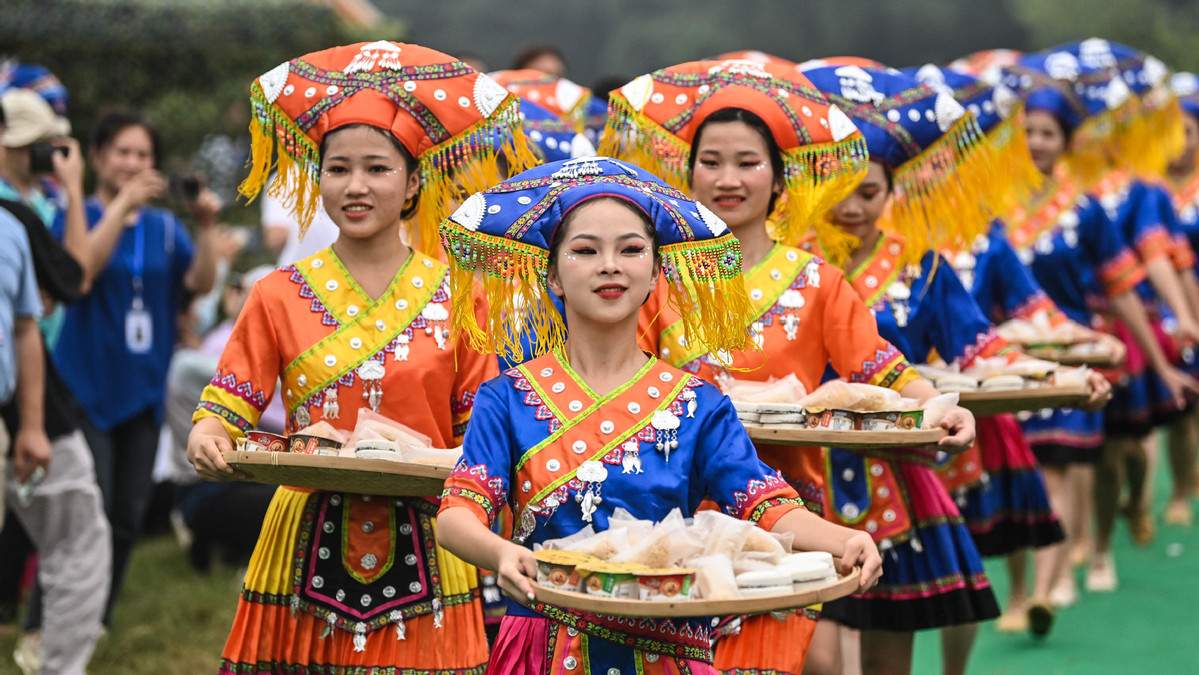
Sanyuesan Festival
Introduction
The Sanyuesan Festival is a vibrant and culturally significant festival celebrated on the third day of the third month on the traditional Chinese calendar, particularly by the Zhuang ethnic group in Guangxi Zhuang autonomous region, China. It is recognized as one of China's traditional festivals and is listed on the national intangible cultural heritage list, highlighting its importance in preserving and promoting ethnic customs and traditions. The festival serves as an occasion for various ethnic groups such as the Zhuang, Yao, Miao, Dong, and Mulam to come together, celebrate their heritage, and engage in traditional festivities that include music, dance, and culinary delights. The Sanyuesan Festival is not only a cultural highlight but also a tourist attraction, drawing visitors from across China and beyond to experience the rich tapestry of ethnic diversity and cultural heritage.
Historical Background
The origins of the Sanyuesan Festival can be traced back to ancient times when it was primarily a festival for ancestor worship and prayers for a good harvest. Over time, it evolved to incorporate various cultural and social elements, making it a vibrant celebration of ethnic identity. The festival is deeply rooted in the agricultural calendar, signaling the arrival of spring and the beginning of the farming season. For the Zhuang people, the festival has held significant importance as a time for singing love songs in the antiphonal (call-and-answer) style, which has long been a tradition for courtship and social interaction. The historical evolution of the festival reflects the blending of agricultural rituals with social customs, resulting in a unique event that celebrates both cultural heritage and community spirit.
Traditional Practices
Dress and Costume
During the Sanyuesan Festival, traditional dress and costume play a pivotal role in enhancing the festive atmosphere. Ethnic groups such as the Yao are known for their elaborate and colorful costumes, which are often adorned with intricate embroidery and unique designs that represent their cultural heritage. The making of Yao costumes is a significant part of the festival preparations, with many people donning traditional attire to participate in various activities. The costumes often symbolize different aspects of ethnic identity, and wearing them during the festival is a way to pay homage to their ancestors and celebrate their cultural roots.
Music and Dance
Music and dance are integral components of the Sanyuesan Festival, with performances that reflect the cultural richness and diversity of the participating ethnic groups. Traditional dances, such as the bamboo dance, are performed with great enthusiasm, showcasing the dexterity and rhythm of the dancers. The music, often characterized by folk songs and the use of traditional instruments, serves as a medium for storytelling and expression of emotions. Antiphonal singing is particularly popular during the festival, where participants engage in call-and-answer exchanges, creating a lively and interactive musical experience.
Food and Cuisine
Culinary traditions are an essential aspect of the Sanyuesan Festival, with food and cuisine playing a central role in the celebrations. Ethnic groups prepare special dishes that are unique to their cultural practices, often using ingredients that have symbolic meanings. Five-color glutinous rice, for example, is a traditional dish that holds cultural significance, with each color representing different aspects of life such as prosperity, health, and happiness. The festival also features fairs focused on local delicacies, providing an opportunity for visitors to taste and appreciate the diverse flavors of ethnic cuisines.
Regional Variations
The Sanyuesan Festival is celebrated across various regions in China, with each area adding its unique flavor and customs to the festivities. In Guangxi Zhuang autonomous region, where the festival is most prominently celebrated, the events are characterized by large-scale gatherings, traditional sports performances, and decorated streets that reflect the cultural heritage of the Zhuang people. In other regions, such as Guizhou and Guangdong provinces, the festival may include additional cultural activities and performances that highlight the traditions of different ethnic groups. These regional variations contribute to the festival's rich diversity, offering a wide range of experiences for those who participate in or visit the celebrations.
Modern Celebrations
In modern times, the Sanyuesan Festival has evolved to incorporate contemporary elements while still retaining its cultural essence. Cities such as Nanning in Guangxi Zhuang autonomous region host elaborate celebrations that combine modern folk songs with traditional cultural heritage. Events such as symphony concerts, costume shows, and folk singing competitions are organized to attract both domestic and international tourists. The festival has become an important cultural event that not only celebrates ethnic traditions but also promotes tourism and economic development in the region. Through these modern celebrations, the Sanyuesan Festival continues to thrive as a vibrant and dynamic cultural event.








